

Basement Golf Spaces
Basement Golf Simulator Rooms in Hudson Valley & Westchester
Turn your basement into a polished golf space designed for year-round practice, entertainment, and a more refined at-home experience.
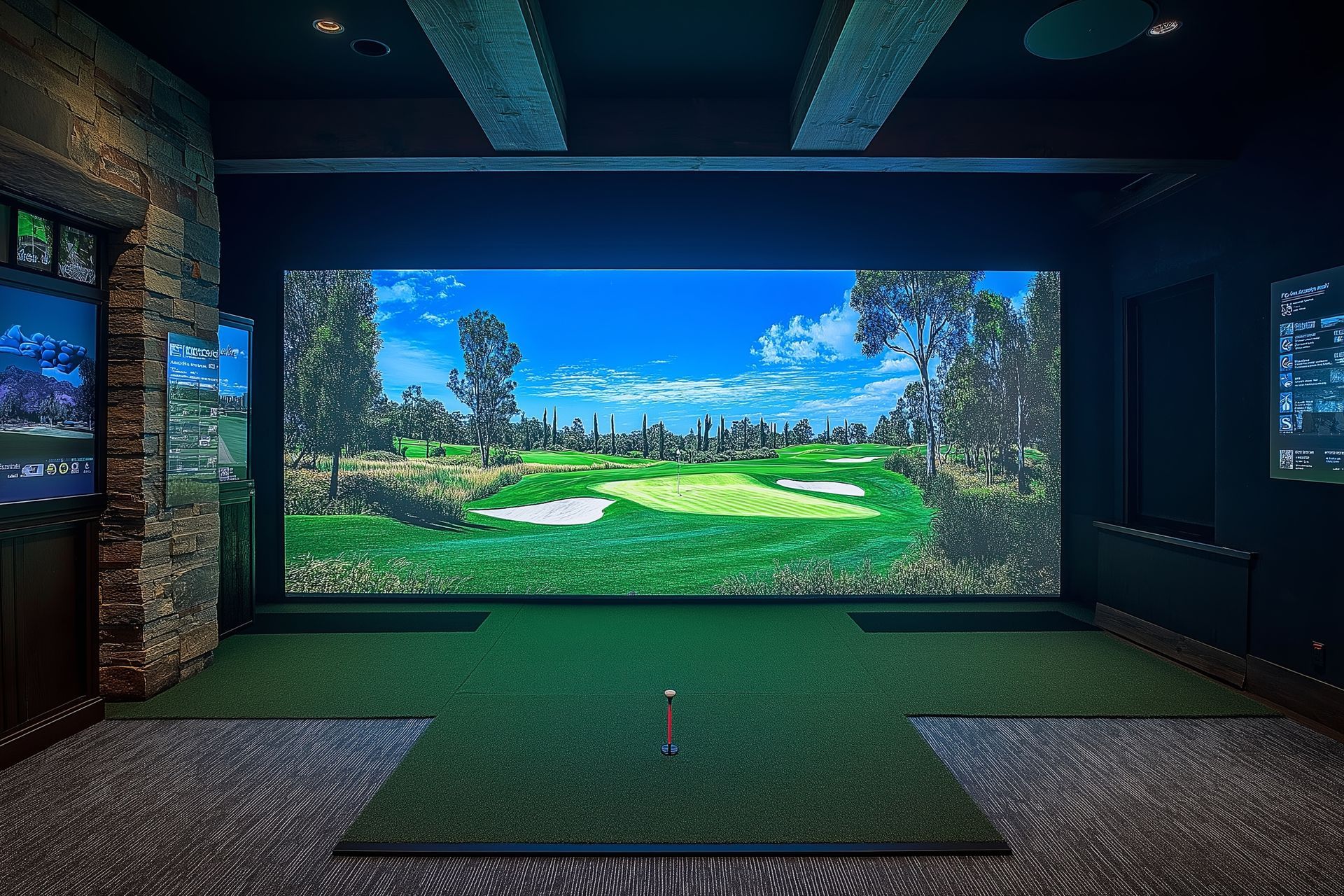
Basement Golf Space Design
Trusted Local Payment Solutions
Turn Your Basement Into a Refined Golf Space at Home
A basement can become far more than extra square footage or a place for storage. With the right planning, it can be transformed into a polished golf simulator room designed for year-round practice, entertainment, and everyday use.
Links & Manor designs basement golf spaces for homeowners in Hudson Valley and Westchester who want a setup that feels intentional from the start. Instead of trying to piece together products, measurements, and layout decisions on your own, we help guide the process and curate a setup that fits your room, your goals, and your budget.
For many homeowners, the basement is one of the most flexible places to create a simulator space. It offers separation from the main living areas, strong design potential, and the opportunity to turn underused square footage into something far more enjoyable and valuable.
Trusted Local Payment Solutions
Why Homeowners Choose the Basement
For many homes, the basement is one of the most practical places to create a simulator space. It often provides the privacy, flexibility, and usable square footage needed for a golf room without disrupting the everyday function of the main floors of the home.
A basement may be a strong fit if you want:
- A dedicated space for year-round practice
- Separation from the main living areas
- A room with strong entertainment potential
- A more private place to play, train, and unwind
- The ability to turn underused square footage into something more purposeful
Basements also make sense for homeowners who want a golf simulator room that feels more integrated into the home rather than added onto it. When the proportions work, a basement can create a highly functional and polished result.
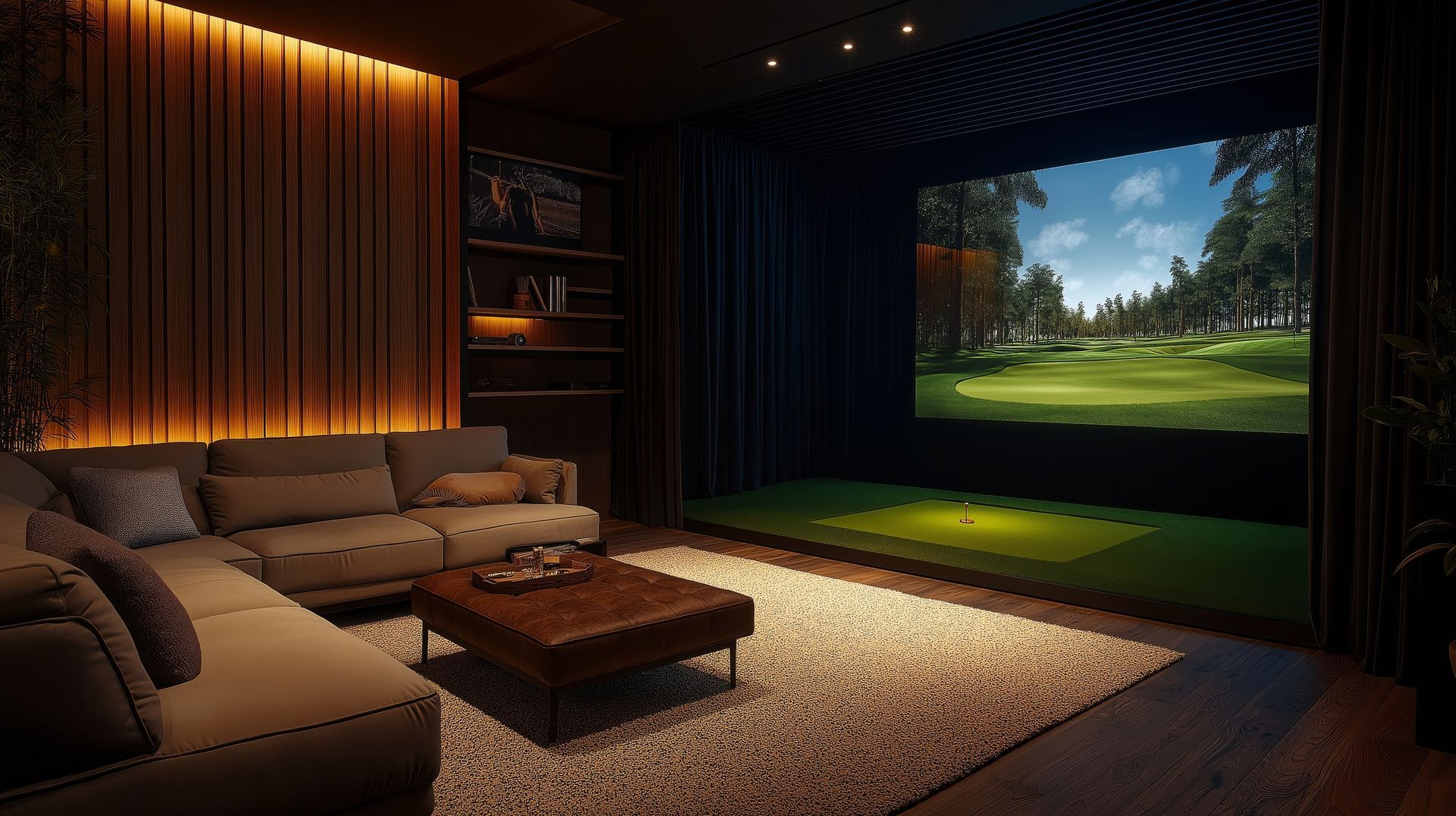
Room Qualifications
Minimum Basement Qualifications
A basement space should meet the following minimum dimensions to be considered for a simulator setup:
10ft
CEILING hEIGHT
16ft
ROOM LENGTH
10ft
ROOM WIDTH
These are starting minimums. A better overall experience may require more room depending on the player, handedness, simulator setup, and the type of experience you want to create.
If you are unsure whether your basement is a fit, the best next step is to have the room reviewed before making any equipment decisions.
Design Considerations
What We Consider When Designing a Basement Golf Space
Not every basement is the same, as each has unique conditions and layout considerations. The best design stems from understanding how the room will be used, what limitations already exist, and how to make the space feel both functional and refined.
Trusted Local Payment Solutions
Ceiling Height: A basement needs enough height to swing comfortably and safely. Minimum clearance matters, but so does how the room feels once the simulator is in place.
Length and Width:
The room has to support the simulator setup, player movement, screen placement, and overall flow without feeling cramped.
Beams, Bulkheads, and Obstructions: Basement-specific structural elements can affect what is possible. We account for ceiling drops, support posts, and other fixed features when planning the layout.
Intended Use: Some homeowners want a straightforward practice environment. Others want the basement to feel more immersive, entertaining, and design-forward.
Finish Level: A basement simulator can remain clean and performance-focused, or it can be elevated with finishes that make it feel more integrated and complete.
Multi-Use Needs: Some basement spaces are intended to serve more than one purpose. We help determine whether that is realistic and how to approach it without compromising the experience.
Why Homeowners Choose Us
Trusted Local Payment Solutions
Basement Golf Spaces Designed for Confidence
For many homeowners, the real decision is not just about the simulator. It is about trust.
They want to feel comfortable with who they are inviting into their home. They want confidence that the room will be done right the first time. And they do not want to be overwhelmed by product choices, measurements, and technical details they should not have to manage alone.
Links & Manor is designed to make that process feel more guided, more thoughtful, and more refined.
Our goal is to help you move forward with more clarity and less guesswork, while creating a basement golf space that feels right for your home.
Featured In





Get Started
See What Your Basement Can Become
If you are considering turning your basement into a golf simulator space, the best first step is to find out what the room can realistically support.
Start with a conversation, share your dimensions, and get clearer direction on what makes sense for your space.
Tell Us About Your Space and What You Want to Create
We will get back to you as soon as possible.
Please try again later.
Common Questions
Besement Golf Simulator FAQs
What is the minimum size needed for a basement golf simulator?
The starting minimum dimensions are 10 feet high, 16 feet long, and 10 feet wide. These are baseline qualifications, but some setups benefit from more room depending on the player, equipment, and intended experience.
Are basements a good place for a golf simulator?
Yes. For many homeowners, the basement is one of the best places to create a golf simulator room because it offers privacy, flexibility, and the ability to turn underused space into something more purposeful.
What if my basement has beams or lower ceiling areas?
That does not automatically rule the room out. Basements often have beams, bulkheads, or other structural elements that need to be worked around. The layout has to be planned carefully to determine what is realistic.
Does a basement need to be fully finished first?
No. Some basement golf spaces begin with a simpler setup, while others are designed as more finished and immersive environments. The right direction depends on your goals, budget, and the type of room you want to create.
Can the basement still be used for other purposes?
Sometimes. Some homeowners want a dedicated golf space, while others want the room to support entertainment or other uses as well. This depends on the layout and whether the space can support multiple functions without hurting the overall experience.
How do I know which setup is right for my basement?
That is exactly where guidance matters. With so many products and configurations available, it can be difficult to know what makes sense for your room and budget. We help curate the right setup based on the basement and how you want to use it.
Will I be able to see the design before the project starts?
Yes. A rendering of the space can be created so you can better understand the layout and overall direction before installation begins.
Is setup and calibration included?
Yes, the goal is a space that is fully ready to use, not just installed.
Trusted Partners